The Commonwealth of Virginia
The first traditional
Thanksgiving
was in Virginia.
Berkeley Hundred. December 4, 1619.
Almost two years before Plymouth's famous feast.
An English religious thanksgiving, formally ordered to be kept every year. A Virginia beginning that deserves to be remembered.
Discover the story
annual thanksgiving
in Massachusetts
harvest gathering
Before Plymouth.
On Virginia soil.
The story begins in the Commonwealth of Virginia, at Berkeley Hundred, on the site now known as Berkeley Plantation.
Here, “traditional” means a formally directed English religious thanksgiving, intended from the outset to return every year. That is Berkeley's distinction. It is a claim grounded in written instructions from 1619, not a claim that gratitude itself began with European settlers. [1]
Captain John Woodlief and the settlers aboard the Margaret reached Berkeley Hundred on December 4, 1619. The Library of Congress records their prayer of thanks for safe passage. The place was on the James River, about 20 miles upstream from Jamestown. [2][4]
Berkeley Hundred was the early settlement. Berkeley Plantation is the later estate on the same historic property.
02 / The surviving instruction
They were told
to remember. Every year.
“shall be yearly and perpetually kept holy as a day of thanksgiving to Almighty God.”
Instruction to Captain John Woodlief
September 4, 1619 · spelling modernized
The first instruction made thanksgiving an annual obligation. Its significance is in those two words: yearly and perpetually. “Official” here means ordered by the expedition's backers, not declared by a government of the United States. [1]
Read the complete instructionThe early Virginia landscape
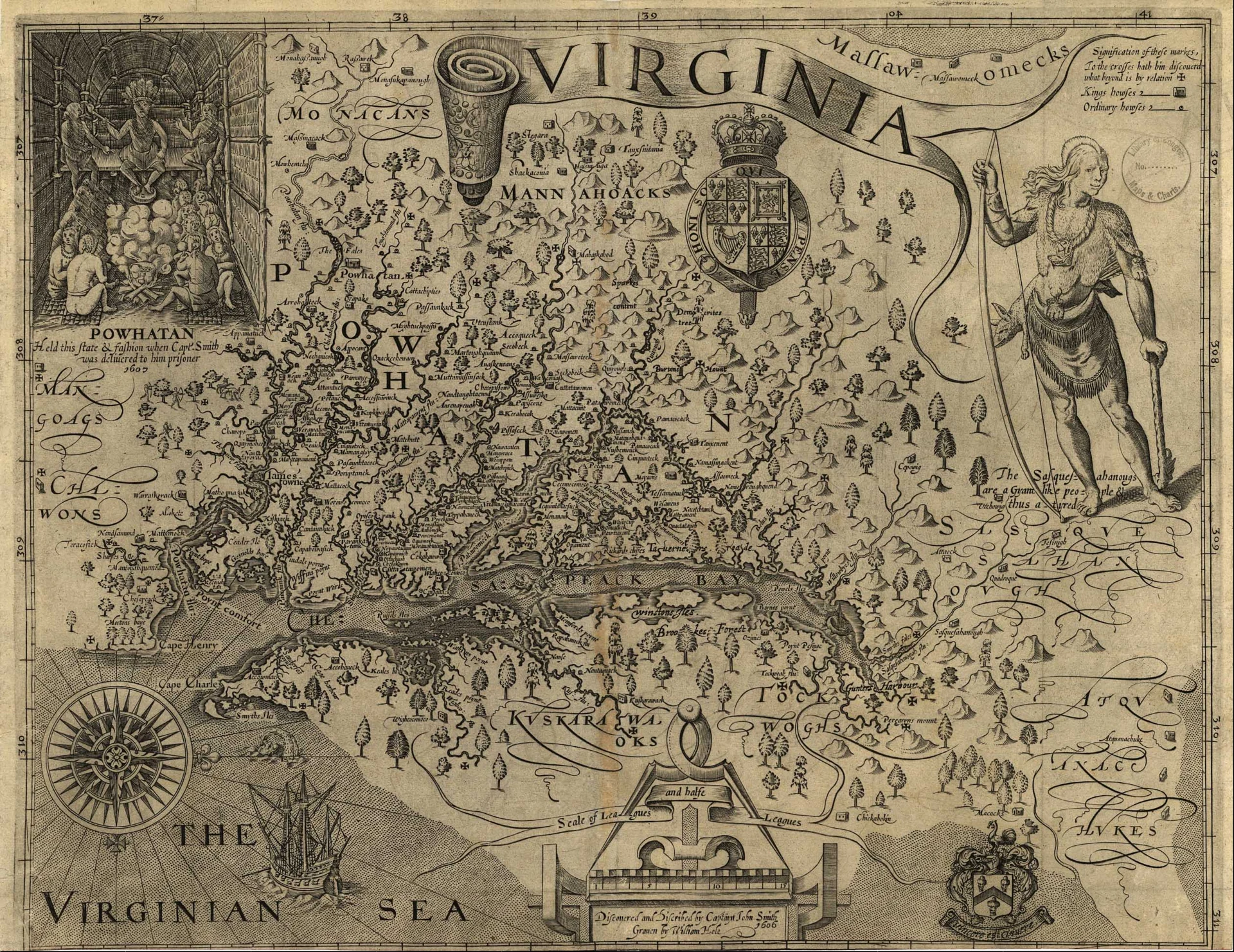
The settlement was broken.
The record survived.
In March 1622, coordinated Powhatan attacks struck English settlements along the James River. The National Park Service records nine deaths at Berkeley Hundred and the settlement's abandonment for several years. Its early observance did not become an uninterrupted annual tradition. [4][5]
Plymouth did not suffer Berkeley's abandonment in that Virginia crisis. It continued, and New England's thanksgiving customs later spread across the country. That helps distinguish a community's survival from the survival of an earlier historical claim. [6]
This comparison is about continuity, not a history without violence. New England later endured King Philip's War in 1675–1676, with devastating consequences for Native peoples. We remember Berkeley's dead and respect the Indigenous peoples whose homelands were being colonized. [7]
04 / A shared inheritance
Honor Plymouth.
Remember Berkeley.
We can carry forward the Massachusetts tradition and still give Virginia its rightful place in the chronology.
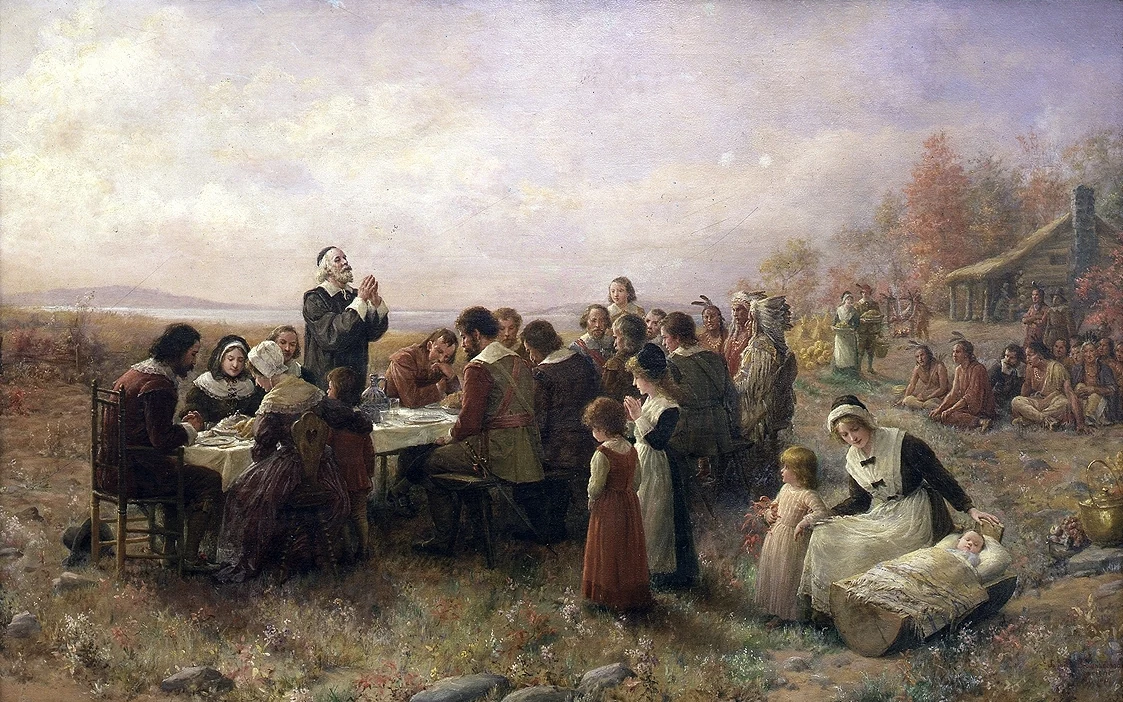
The harvest feast at Plymouth in 1621 brought English colonists and Wampanoag people together. Over time, New England's customs of prayer, feasting, and family gathering developed into an annual celebration and spread across America. We honor the tradition Americans adopted and continue to celebrate. [6]
Berkeley asks us to remember an earlier observance with an explicit annual instruction. Respect for Plymouth and recognition of Virginia can sit at the same table.
Read Plymouth's holiday history05 / Brought back into the light
A forgotten story.
A place in the national memory.
The William & Mary connection
Berkeley credits Lyon Gardiner Tyler, a former president of William & Mary and son of President John Tyler, with researching the Smyth of Nibley Papers and publicizing the story in the Richmond News Leader on April 3, 1931. The New York Public Library had acquired the papers in 1897. Tyler helped bring an existing record to public attention. [8][9]
Virginia enters the presidential account
In 1962, John J. Wicker Jr. challenged Kennedy’s emphasis on Massachusetts. Replying for the President, historian Arthur M. Schlesinger Jr. acknowledged the omission with a quip about “unconquerable New England bias.” Kennedy’s 1963 Thanksgiving proclamation then recognized “our forefathers in Virginia and in Massachusetts.” It acknowledged both places without awarding an exclusive first. [8][10]
The claim, carefully made
Pride in the story.
Care with the evidence.
What does the written order prove?
It proves the intention to establish an annual thanksgiving. The Library of Congress describes the arriving settlers' prayer; Colonial Williamsburg treats performance of the ceremony more cautiously, as dependent on the settlers obeying the order. The instruction does not establish an exact spoken prayer, meal, or guest list. [1][2][3]
Did Plymouth copy Berkeley?
The sources cited here do not establish that Plymouth copied Berkeley. The copying we can speak of is the later adoption and spread of New England's customs across the United States. Our claim concerns the earlier date and annual requirement at Berkeley, not a proven line of influence on Plymouth. [6]
What about earlier thanksgivings?
Indigenous traditions of giving thanks long predate European arrival. Spanish settlers held a thanksgiving Mass and meal at St. Augustine in 1565, and Jamestown had earlier thanksgiving services. Berkeley's distinctive claim is the formally ordered annual English observance, rather than the first expression of gratitude in America. [3][11]
Is today's holiday an unbroken Berkeley tradition?
No. Berkeley's observance was interrupted. The familiar national holiday grew from later traditions and presidential proclamations, with Lincoln's 1863 proclamation establishing the annual national precedent. Giving Berkeley credit for its 1619 instruction does not require rewriting that later history. [5][12]
Read the record for yourself
The evidence behind the story.
- Primary document · 1619Instructions to Captain John Woodlief
Encyclopedia Virginia transcription. The annual thanksgiving requirement.
- Library of CongressToday in History — December 4
The arrival at Berkeley and the prayer for safe passage.
- Colonial WilliamsburgWhen Was the First Thanksgiving
Different observances, earlier claims, and limits of the evidence.
- National Park ServiceCharles City County — Berkeley
The settlement, the 1622 attack, abandonment, and later estate.
- Massachusetts Commonwealth MuseumThe Berkeley Thanksgiving
Massachusetts's recognition of the event and its discontinuity.
- Pilgrim Hall MuseumEvolution of an American Holiday
The 1621 feast and the spread of New England's annual customs.
- National Museum of the American IndianThe First Thanksgiving — Timeline
Wampanoag history, colonial expansion, and the conflict of 1675–1676.
- Berkeley Plantation · site interpretationFirst Thanksgiving
Berkeley's account of Tyler's research and the Kennedy exchange.
- New York Public Library · archiveSmyth of Nibley Papers
The collection of settlement records, acquired in 1897.
- Primary document · 1963Kennedy's Thanksgiving Proclamation
The presidential text recognizing Virginia and Massachusetts.
- National Park ServiceThe First Thanksgiving — St. Augustine
The Spanish thanksgiving Mass and meal of September 8, 1565.
- National Archives MuseumThanksgiving — Historical Perspectives
The Plymouth gathering and Lincoln's national holiday precedent.
Image credits and open licenses 3 images
Berkeley photograph · Joe Orbin, 2016, via Wikimedia Commons. CC BY-SA 4.0. Resized, converted to WebP, cropped for layout, and saturation reduced in display. This image and its adaptations remain available under CC BY-SA 4.0.
Virginia map · John Smith, cartographer; William Hole, engraver, via Wikimedia Commons / Virtual Jamestown. First published in 1612. Public domain. Resized and converted to WebP.
Plymouth painting · Jennie Augusta Brownscombe, The First Thanksgiving at Plymouth, 1914, via Wikimedia Commons. Public domain. Converted to WebP, cropped for layout, and saturation reduced in display.
A story worth preserving
Keep the gratitude.
Remember the beginning.
Honor the tradition we share. Give Berkeley, and the Commonwealth of Virginia, their place in its history.